


A working vinyard over several generations, Henri, and subsequently, his daughter,
Agnès, are passionate vintners. In this place nothing seems really ordinary,
and the visitor who is open-minded will feel that here , there is genuine
farming and a cultural experience to be discovered.

HISTORY :
Henri’s great- grandfather, Mr. Vincent Negrel, a wine and oil
merchant at La Cadière d’Azur, buys part of the estate. His daughter, Agnès,
marries Mr. Eugène Pignatel. Towards the 1930s they create the brand name :
Château de la Noblesse, believing in the Bandol vintage. Their daughter, Marie-Jeanne,
along with her husband, replant with appropriate varieties of vines.
In 1961 the Château de la Noblesse accounts for 10% of the Bandol vintage.
After agricultural college, Henri goes into partnership with his mother, then buys uncultivated lands adjacent to the estate and sets about improving them. He levels and plants them , to increase the production of vintage Bandol.
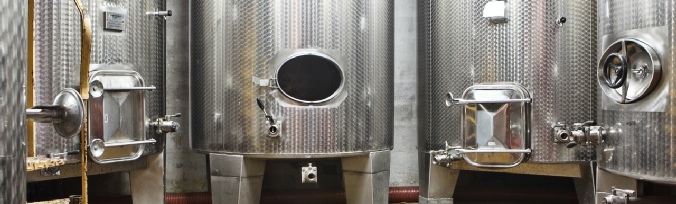
In 1990, Agnès, after oenological studies, goes into partnership with her father, Henri. They build a new wine – making plant for vinification and storage of bottled wine. Since its creation, the estate has remained in the family and is of workable dimensions.


THE SOIL :
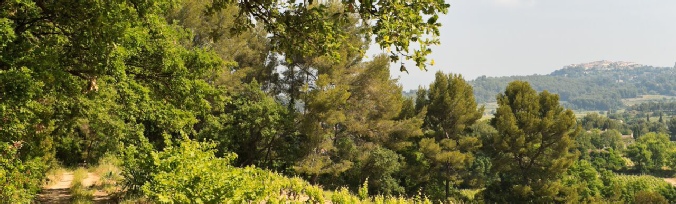
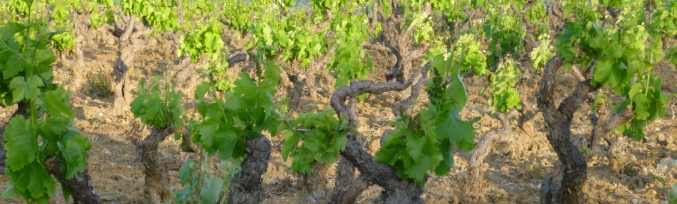
The Château de la Noblesse extends continuously over approximately
14 hectares, exposed to the rising sun. The soil is clayey and chalky (the origin
of the name of the communal road), which means that the soil must be
worked at the right time. (The soil must not be too wet as it will stick
to the implements, nor too dry o r it will become rock hard.) It is
necessary to plough frequently in Summer, otherwise there is too much
evaporation from the cracks in the earth due to its retractation.
THE VINE PLANTS :
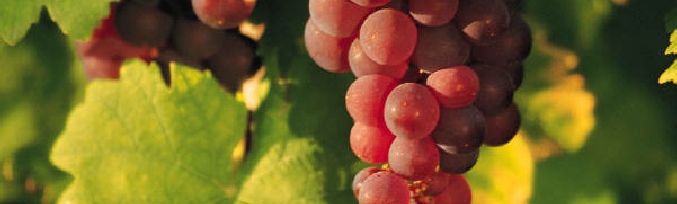
For black grapes with green pulp, the plants consist
mainly of :
For green grapes, the vines are :
THE CLIMATE :
Situated in the basin of Le Beausset, we benefit from a maximum of sunshine
with very little rain, which means that the vintners must work the soil
or remove some of the grapes at the beginning of Summer (green or unripe
grape harvest ), in order to prevent the vines from suffering and to enable
them to bring their grapes to maturity.
THE WORK :
Agnès Cade and Henri Gaussen are passionate vintners. They study the soil and the subsoil in order to plant the appropriate vines. Henri looks after the vines as a father would look after his family. As soon as the leaves fall in Winter, they prune the vines , differently , depending on age.
In Spring, there is no lack of work as the vines are growing. So, it is necessary
to tie up, thin out ( i.e. remove useless branches ), clip the tops, plough (
to avoid the competition with weeds ),strip the fruit.
In Summer, when the vine lignifies , the bunches of grapes change colour and the shoots become woody.
In Autumn, the vine harvest is the busiest time, coming at the end of a year’s work. The grapes must be ripe ( sufficiently sweet to allow for the minimal alcohol content permitted ), since chaptalization is forbidden.
The varieties are picked and sorted by hand, each separately, depending on maturity.

VINIFICATION IS AN EXACT ART :
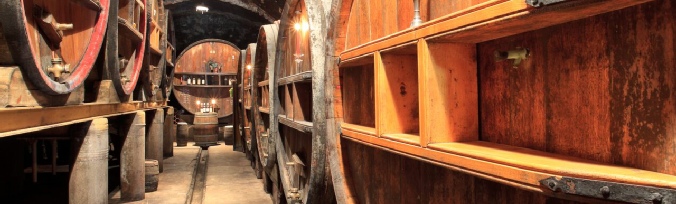
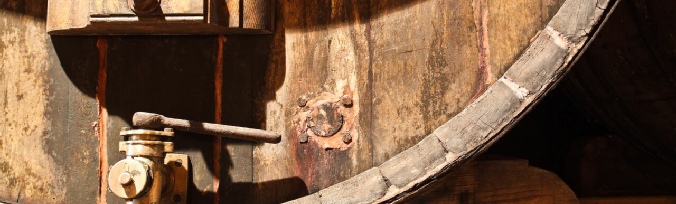
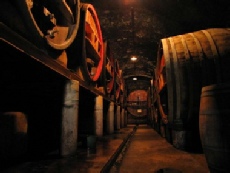
The red wine of the new vintage is tended , for 18 months minimum,,in barrels in the 18th century vaulted cellar of the Château de la Noblesse. The red wines mature very well. They can remain in your temperate cellar for several years.
ECOLOGY :
Agnès has deliberately chosen the « bordelaise evolution « for bottling, since the weight in glass is greater than that of the «bordelaise lourde » by 20 – 25%.
Some years, when there are two different vintages of red wine alone, the latter is named « Pignatel « in hommage to Agnès’ grandmother, Marie-Jeanne Pignatel.
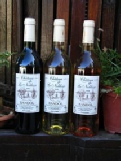
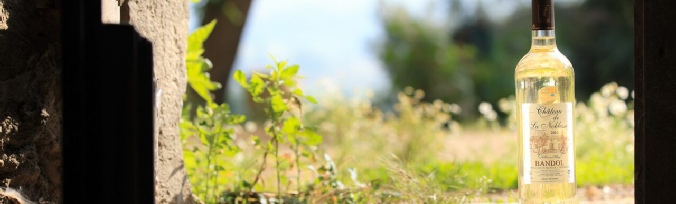
On sale on the estate, there is rosé wine, white wine of the year and red wines of different vintages ( 4 minimum ), which wil allow you to have wines ready to be drunk and sampled or younger wines, to be looked after by you.
The red wines improve with time, they have flavours of liquorice, morello cherry and blackcurrant. After 10 years of good keeping they have the fragrance of leather, undergrowth, liquorice, truffles, venison.